

Flowers and perennials
Magnificent ornamental garden
An ornamental garden without flowering plants? That’s like a sky without stars. The diverse colours and shapes of an ornamental bed transform the garden into a magical place that changes constantly throughout the seasons.
Flower dreams come true
Bright colours, seductive scents, lush green hedges and healthy, vigorous ornamental shrubs don’t just happen by chance: to achieve this, it is crucial to understand the needs of each plant. Flowers and shrubs, for example, need regular fertilisation to develop their full blooming potential. And young plants in particular can only successfully defend themselves against aphids and other pests if they are supplied with sufficient nutrients and trace elements. Oscorna natural products make it easy for you: they contain everything your ornamental garden needs.
You can find more on this topic in > Oscorna gardening knowledge
Healthy from root to bloom
You will find a whole range of different Oscorna fertilisers for your ornamental plants in shops. All the information you need on how to use them correctly can be found on the respective packaging. You can find out when you need which fertiliser in our gardening calendar.
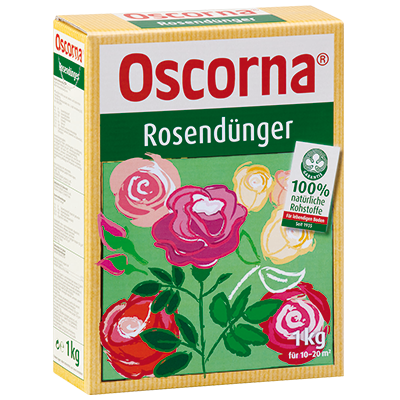
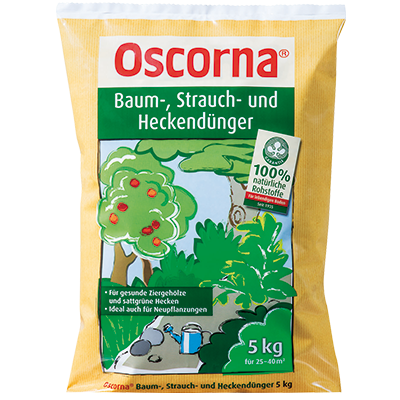
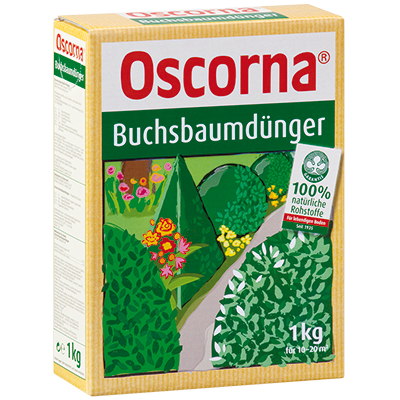
How to apply the correct dosage
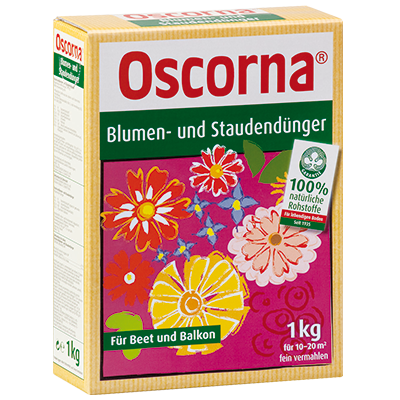
Application of Oscorna Flower and Perennial Fertiliser
| Application | Oscorna Flower and Perennial Fertiliser |
|---|
Organic NPK fertiliser 6-9-0.5
| Main fertilisation: | 100 g/m² |
| Re-fertilisation: | 50 – 100 g/m² |
| Main application period: | April to October |
| Package size: | 1 kg, 2.5 kg |
| Application | Oscorna rhododendron, azalea and heather fertiliser |
|---|
Organic NPK fertiliser 6-3-0,5
| Main fertilisation: | In early spring or when planting new plants, spread 100 g/m² evenly. |
| Follow-up fertilisation: | In mid-June, spread 50 g per m² evenly. |
| Main application period: | March, April and June |
| Package size: | 1 kg, 2.5 kg and 20 kg |
Beautiful flowers and lush greenery – here’s how
In ornamental gardens in particular, the question always arises: how can I care for my plants so that they are sufficiently resistant to pests and vermin? In this context, the view often arises that too much fertiliser could be harmful. You can rest assured: this is a misconception when it comes to Oscorna’s pure natural fertiliser. Even if you accidentally apply slightly more than the recommended dose, there is no risk of over-fertilisation thanks to its natural immediate and long-term effect!
Oscorna Flower and Perennial Fertiliser
Organic NPK fertiliser 6-9-0.5
- A balanced combination of nutrients for all perennials and flowering plants on patios, balconies and in the garden
- Stimulates flower formation and helps all flowering and foliage plants to flourish magnificently
- Prevents nutrient deficiencies, thereby improving resistance to diseases and pests
- Recommended for use in combination with Oscorna Soil Activator as a preventative measure against soil depletion
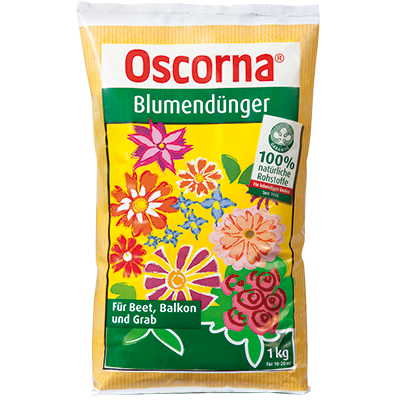
OSCORNA FLOWER FERTILISER
Organic NPK fertiliser 6-9-0.5
- A balanced combination of nutrients for all perennials and flowering plants
- Available in a small 500-gram pack, ideal particularly for grave planting, small gardens, balconies and patios
- Stimulates flower formation and helps all flowering and foliage plants to flourish magnificently
- Recommended for use in combination with Oscorna Soil Activator as a preventative measure against soil depletion
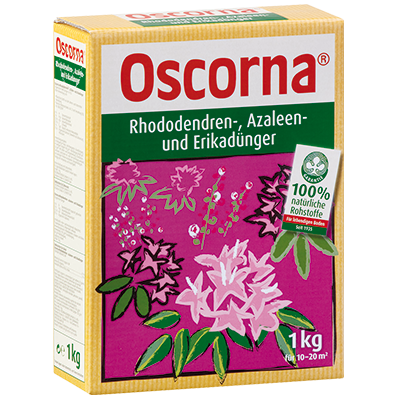
Oscorna Fertiliser for Rhododendrons, Azaleas and Heather
Organic NPK fertiliser 6-3-0.5
- Specialised fertiliser for abundant bud formation, lush flowering and fresh, green foliage
- Balanced composition of all essential nutrients
- Contains a variety of natural trace elements
- Immediate relief for nitrogen and iron deficiencies
- Long-lasting effect
The power comes from the ground
The better the soil, the more beautiful and vigorous your ornamental plants will be. Therefore, treat the soil in which they thrive once a year with > Compost and > Oscorna Soil Activator. This will keep the soil fertile for a long time.
green thumb
There is great diversity in ornamental gardens. However, as a rule of thumb, start with the main fertilisation in spring and fertilise at least once more before the end of the growing season. Simply spread evenly, work in lightly and then water!
You will find more detailed information on plants and dosage on the respective product packaging and in our calendar.