
Gardening knowledge
The Oscorna guide for all year round
No plant in the garden stands alone. Rather, it is part of a large, interconnected system. That is why it is so important to pay attention to a few important biological relationships when designing, planting and maintaining a garden.

Gardening knowledge
The Oscorna guide for the whole year
Well rooted
Spoilt, pampered, stunted? How to avoid the dreaded pot effect when planting new plants
It goes without saying that the roots of young flowers, vegetable plants, perennials, shrubs, roses and fruit trees should find the best possible conditions in the soil: loose, airy, well-drained, with sufficient nutrients. However, some people go a little too far – and risk the health of their new plants as a result.
Too much pampering: this is how the flowerpot effect arises
Well-meaning amateur gardeners leave the soil they have dug up after planting the plants untouched. Instead, they fill the holes and pits with only the “very best”, for example with pure compost or even purchased potting soil. This can backfire, especially with perennial plants that are supposed to develop an extensive root system over time. They will not do this if the soil in the planting hole is significantly better than the soil in the surrounding area. This results in the so-called flowerpot effect: the roots grow a little further within the “luxury zone” at most, but not nearly far enough to reliably supply the plants with water and nutrients. In the long run, this can cause the plant to wither or even die. It also reduces its stability.
The best soil for new garden plants
It is better to optimise the excavated soil before refilling: mix in well-matured compost, but this should make up no more than a quarter to a third of the total amount. If the soil is heavy, add some sand or fine gravel to loosen it up. Potting soil, on the other hand, is of no use.
If you do not have your own compost to mix in, you should invest in good quality compost that is available to buy. Compost improves soil life, increasing the number of soil organisms and microorganisms – a prerequisite for healthy plant growth. Now mix Oscorna Soil Activator into the prepared soil and sprinkle Oscorna fertiliser on the surface after planting. This feeds the soil life and makes the soil crumbly and vital. This creates ideal conditions in the new location for the new plants to thrive.
Questions about the correct dosage of Oscorna Soil Activator and fertiliser? Read more in the > Chapter on new plantings or take advantage of our free consultation service.
Fertile soil
What healthy garden soil and cheese have in common. And why soil should ideally be "cooked".
Air, air, air! Soil is like cheese: the (almost) most important thing is the holes. A crumbly, humus-rich, well-aerated, sufficiently moist and easily rootable soil contains as much air as solid and liquid substances combined. Professional gardeners refer to this as “ripe” soil.
Ripe soil, good soil
“Soil ripeness” is the ideal condition that gardening enthusiasts should strive for. The opposite is dense soil, which significantly reduces fertility. Here, the soil pores are compressed. This leads to waterlogging, a reduction in the number of soil organisms and less root penetration. Why? The pores in the soil – i.e. the cavities between the solid components such as minerals and humus particles – ensure that it is aerated. This allows the plant roots and the organisms living there to be supplied with sufficient oxygen. In addition, well-aerated, living soil can store water and nutrients better: one square metre can absorb 200 litres of water without showing signs of waterlogging.
Please air it out!
But how does dense soil become well-aerated, fertile soil? Fortunately, there are a multitude of volunteers who are experts at this task. We are referring to the countless animals, single-celled organisms, fungi and bacteria that live in the soil. They all keep the soil’s nutrient cycle going, loosen the earth and create cavities through which air and water can circulate. This soil life needs to be fed and encouraged, for example through humus management, mulching or simply with Oscorna Soil Activator.
Problems with soil that is too dense? Our team of gardeners will be happy to advise you!
ants
Why they are so important in natural gardens: encourage ants in the right places
When it comes to ants, gardeners have mixed feelings: no one likes to see them on their jam sandwich during breakfast outdoors, but in many other places they are a real blessing. Studies have shown that ant populations have a beneficial effect on plant and root development. This is no surprise, as these tireless soil workers are very useful in many ways. Their tunnels and burrows loosen the soil, ensuring good aeration and drainage. This can also be observed in small spaces, such as compost heaps.
Ants protect plant buds
Ants are also active in waste disposal. They rid the garden of dead animals and return them to the soil as nutrients. At other times, they feed on plant pests. Have you ever observed ant trails on stone fruit trees? They protect the young flower buds by ridding them of beetles and caterpillars. It is also a good sign if you discover ants on your peonies. This is because they keep pests at bay.
h3. Ant repellents in vegetable patches and lawns
Of course, there are also places where an ant nest or even an anthill can be a nuisance, for example in lawns or vegetable patches. Organic gardeners rely on natural repellents in these cases: plant manure makes the location unattractive to ants. In vegetable beds, mixed cultivation [link to gardening knowledge/mixed cultivation] with intensely fragrant herbs such as lavender or thyme is promising. It is also possible to relocate the nests mechanically using a clay pot or a cloth, provided that the ant species in question is not protected. You are sure to find a place in your garden where the crawling creatures will not cause any disturbance and their services will be welcome.
silicon
The secret to stability revealed: why silicon is so important for your garden
Why do wafer-thin plants such as horsetail have such exceptional stability and toughness – comparatively speaking? Botanists were already asking themselves this question in the 19th century. They researched what gives these plants their supporting function and structure. In doing so, they discovered the trace element silicon. It turned out that the more silicon these plants contained, the more stable and healthier they were!
Stable thanks to silicic acid
Oxygen and silicon are the most common elements in the Earth’s crust; they are literally as plentiful as “sand on the beach”. Together, they form silicic acid. This, in turn, is essential for elasticity, resilience and strength. It is found primarily in grasses. Among them, bamboo is a particularly impressive example of exceptional vigour and flexibility combined with stability.
Strengthen plants’ defences
Many other plants also rely on silicic acid to protect themselves from cold, heat, drought, disease and pests. In the garden, it is therefore important to ensure a constant supply. This can be achieved, for example, with Oscorna Soil Activator, which is a good source of silicic acid thanks to its high content of natural minerals from the rock world: for stable growth and to strengthen the immune system.
If you would like to find out more about which trace elements your plants need, give us a call!
Order Oscorna guides
The world is changing, but the laws of nature remain the same. This is particularly evident in the garden, where traditional knowledge is still as valuable today as it was years and decades ago. Our gardening books offer you a glimpse into Oscorna’s many years of expertise.
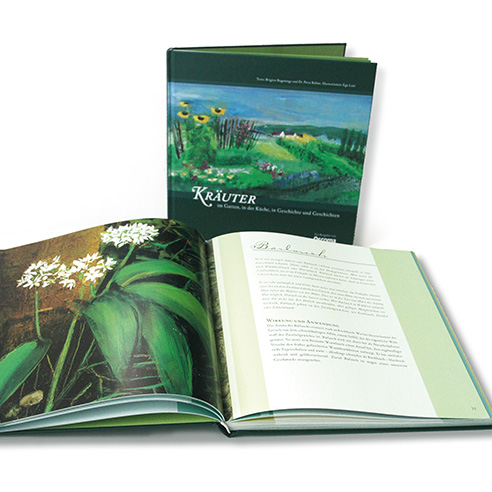
„Kräuter im Garten, in der Küche, in Geschichte und Geschichten”
Tips on cultivation, for your own herb rack, delicious recipes, mystical stories and much more.
14,95 Euro
„Biologisch Gärtnern vom Frühjahr, bis zum Herbst”
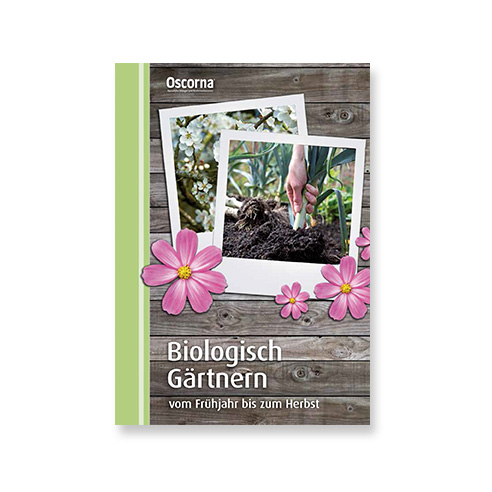
Our gardening book (now in a revised new edition) with lots of valuable tips is available from us (for 4,50 Euro in stamps).